
Beyond the jacket: Klättermusen takes its mountain philosophy into guided travel
21/October/2026

Klättermusen is giving skiers two ways into the mountains this winter: clothing designed for demanding conditions, and guided journeys into the environments that inspire it. Its Klättermusen Experiences business, known as KMX, has a 2026/27 programme ranging from introductory touring on Mount Etna to boat-supported skiing in northern Norway and expeditions along Greenland’s west coast. Alongside it, the clothing brand’s autumn/winter 2026 collection introduces insulated Meile ski outfits while updating established freeride and ski-mountaineering ranges.
The connection is more substantial than a clothing label lending its name to a holiday. KMX grew out of a relationship between Klättermusen chief executive Gonz Ferrero and mountain guide Fred Buttard, founder of Upguides. Their stated ambition is to share a way of travelling shaped by local knowledge, changing conditions and the people involved, rather than sell an inflexible itinerary.
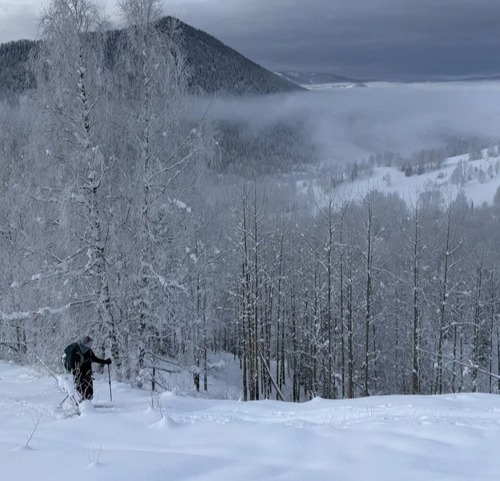
For a company founded by Swedish climbers in 1975, the move brings its equipment story into sharper focus. Customers can buy the shell jacket, but they can also book a journey into the sort of landscape it was designed to handle. The unifying idea is adaptability: in the clothing, in the guiding and in the willingness to change plans when the mountains demand it.
An idea formed on the road north
According to KMX’s account of its origins, Ferrero and Buttard met while ski touring in Tarfala, in northern Sweden. A snowstorm, time in a mountain hut and extended conversations established common ground. Weeks later, driving along Norway’s E6 towards a splitboard festival in Finnmark, they began discussing what would become Klättermusen Experiences.
Buttard brought two decades of experience as an IFMGA-certified mountain guide, including nearly 18 years exploring and guiding in Finnmark. Ferrero brought the clothing company’s background in equipping people for mountain environments. The concept took shape further during Buttard’s final Upguides expedition, a ski-and-sail journey along Greenland’s west coast.
“Finnmark offers the rare chance to step into a different rhythm,” Ferrero says. “You leave behind the pace you’re used to and start paying attention to different things. In the end, the journey inward becomes just as important as the one across the landscape.”
Buttard is now KMX’s head of experience design and guides. The business says journeys are led by certified guides, with IFMGA and/or other qualifications depending on the destination—a distinction worth preserving rather than implying every departure has an identical guiding structure.
Finnmark anchors a wider winter programme
Northern Norway remains central to the offering. KMX lists Finnmark trips at introductory, intermediate, advanced and expert levels, allowing customers to choose more precisely than a broad “ski touring holiday” description would permit. Introductory departures are scheduled for 14–21 March and 25 April–2 May 2027, with other levels operating across the late-winter and spring period.
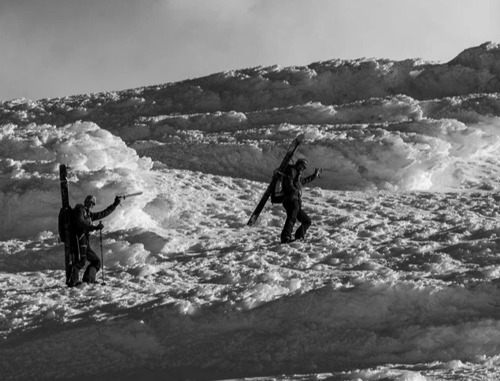
Accommodation and access vary. Ski-and-sail departures use a vessel as a moving base, allowing the itinerary to respond to snow and weather. Other Norwegian trips combine lodge accommodation with boat access, including programmes in Efjord and the Lyngen Alps.
KMX’s description is explicit about the role of uncertainty: “Conditions change and plans adapt. We collaborate with uncertainty rather than work against it.” That approach is part of the proposition, not an incidental qualification at the bottom of a booking page.
The winter programme also extends well beyond Scandinavia:
Dates and classifications are those currently listed by KMX.
These labels describe different kinds of mountain holiday, not interchangeable packages. The appeal of a yurt-based week in the Altai differs from a moving expedition base in Greenland or a shorter introductory touring experience in Norway. KMX also offers bespoke trips for families, friends and mountain clubs.
Women’s progression is part of the programme
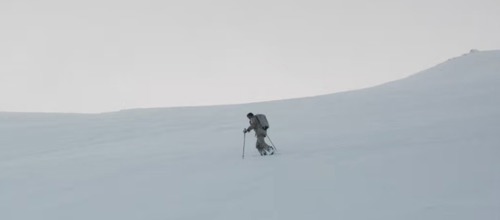
The “Queen Lines” departures add a specific focus on women’s freeriding and touring. A Chamonix edition is scheduled for 20–27 February 2027, followed by a Nuvsvåg trip in Arctic Norway on 18–25 April. Both are listed at advanced level, with the Norwegian departure explicitly framed around progression.
Their inclusion illustrates the programme’s segmentation: it is not solely about reaching remote places, but matching participants with an appropriate group and purpose. Introductory touring, advanced women’s trips and expert Finnmark departures sit within the same business without being presented as the same experience.
The marketing also gives considerable space to guides’ stories. In a KMX interview, Buttard recalls crossing Øksfjord by kayak with ski equipment, beginning an ascent at 9pm and waiting near the summit until 1am for the right light before descending spring snow. Such accounts communicate the product more effectively than a simple list of vertical metres: the timing, company and setting are part of what guests are buying.
From a climbers’ workshop to a recognisable equipment brand
Klättermusen’s own history places its beginnings in Umeå in 1975, where a group of local climbers established a small do-it-yourself workshop. Led by Peter Askulv, they made equipment to solve problems encountered in the mountains, developing the operation into a business supplying outdoor enthusiasts during the 1980s. The company is now based in Åre.
The name translates as “climbing mouse”, an unusually modest identity for a technical outdoor company. Its more consequential distinction has been its approach to product development: functional details, distinctive construction and material experimentation rather than an attempt to make every garment resemble the established outdoor
In a 2020 interview, Ferrero explained that recognisability mattered even without a visible logo. He also described the balance between environmental considerations, functionality and appearance, giving aesthetics importance without treating them as a substitute for
That helps explain the brand’s ability to speak to different audiences. The same interview noted interest from Japanese and Korean distributors in the early 2000s and the unexpected appearance of its specialist down shorts on Tokyo streets. Its technical identity had acquired a life beyond the mountains.
Today, the company’s Japanese website presents a dedicated autumn/winter 2026 ski and snowboard collection and lists brand stores in Harajuku and Jimbocho. Its international online business also serves markets including Britain, Europe and North America. These are tangible signs of its reach, although they should not be mistaken for evidence of a particular current revenue or sales-growth rate.
Values built around keeping equipment in use
Klättermusen’s longstanding formulation is “Maximum safety, minimum impact”. Its practical interpretation places durability between the two ambitions: equipment must remain dependable in difficult conditions, while a longer working life reduces the need for replacement.
The company’s stated environmental milestones include switching to entirely organic cotton in 2006, introducing nylon made from recycled fishing nets in its backpacks in 2009 and achieving a fully fluorocarbon-free collection in September 2017. These are company-reported milestones, rather than a claim that every product has no environmental impact.
Its current description of the philosophy is notably direct: “repair equipment until it falls apart” and keep improving construction. That emphasis makes ongoing models and revised versions as relevant to the brand’s story as completely new launches.
There is nevertheless a tension to acknowledge. Material choices and garment longevity do not, by themselves, establish the environmental footprint of international adventure travel. The KMX offering includes long-haul destinations and vessel-based expeditions; its appeal as a mountain experience should be considered separately from the clothing brand’s claims about textile production.
The key clothing for winter 2026/27
The autumn/winter 2026 collection distinguishes between genuinely new styles and existing products returning in new colours. That matters for buyers: the established Brage and Svalinn families remain central, while Meile is the major new ski-clothing introduction.
Meile: a new insulated freeride option
The Meile jacket and trousers are listed as new styles in both men’s and women’s versions. Klättermusen positions the jacket as insulated protection for storms and backcountry use, and the trousers as insulated ski and snowboard clothing for cold freeride terrain.
On the UK website, the men’s jacket is listed at £750 and the trousers at £650. This places the outfit firmly in the premium market and distinguishes it from a lightweight touring shell intended to be combined with separately selected insulation.
Meile broadens the winter proposition: the range is not aimed exclusively at skiers prioritising minimum weight and maximum breathability on the ascent.
Brage 2.0: the established freeride shell system
Brage 2.0 remains the brand’s principal freeride and backcountry jacket-and-salopette combination, with new colours listed for men and women this season.
KMX itself features the Brage 2.0 salopette among its suggested Arctic equipment, describing it as a stretchy, flexible shell for backcountry and freeride skiing. The link between travel and clothing is therefore explicit: the experience business directs customers towards equipment relevant to its trips.
Svalinn and Skade 2.0: the touring-focused pairing
For ski mountaineering, the Svalinn Hood Jacket is the lighter proposition. KMX describes it as a breathable, durable three-layer shell, while the clothing brand emphasises mobility.
The Skade 2.0 salopette complements that brief, with a focus on flexibility and freedom of movement for ski mountaineering. Both men’s and women’s versions appear in the current winter offering.
This pairing is the clearest expression of the touring side of the collection: clothing organised around sustained movement as well as the descent.
Gimle, Fafne and insulation layers
The new Gimle Hoodie is a wool-blend layering piece designed for skiing, Alpine climbing and cold-weather use. Men’s and women’s versions feature in the autumn/winter highlights.
Also newly listed is the men’s Fafne Half Zip Sweater, a technical base layer, while Fafne Long Johns return in new colours. Existing insulation options include the PrimaLoft-lined Vale jacket and lightweight down pieces in the Lopt family. Together, they allow buyers to build a system rather than depend on one heavily insulated outer garment.
Packs and cold-weather accessories
The Japanese winter collection highlights the Gyme 35-litre, Kåre 30-litre, Ull 30-litre and Jökull 18-litre packs, demonstrating the range of carrying capacities available around the ski collection. The new Surt Mitts are positioned for cold, exposed freeride conditions, while KMX highlights a separate Helmet Holder 2.0 attachment for carrying a helmet on a backpack.
These listings establish intended use and current positioning, not independent performance verdicts. Specific fabric construction, fit, weight and equipment compatibility remain important considerations when selecting a complete expedition or touring kit.
A business selling participation as well as equipment
KMX gives Klättermusen a relationship with customers that extends beyond buying clothing. The main brand website directs visitors towards guided touring and ski-and-sail, while the travel website leads them back to relevant garments and accessories. A monthly dispatch and guide-led journal provide an editorial connection between departures.
The commercial logic is clear: clothing, stories and guided participation reinforce one another. But its credibility depends on the experiences being worthwhile in their own right, not merely providing a backdrop for product photography.
Buttard’s guiding background and the programme’s differentiation by ability give the proposition substance. Equally important is the willingness to describe changing conditions as fundamental to the journey. Remote skiing is not presented as a guaranteed sequence of perfect descents.
For winter 2026/27, Klättermusen’s direction is therefore visible in both halves of the business. The clothing collection expands with an insulated freeride system while retaining specialist touring shells; KMX offers routes into the mountains ranging from introductory trips to advanced Arctic journeys. More than 50 years after its workshop beginnings, the company is extending its original question—what do people need out there?—from the equipment they wear to the expertise and access that help them go.
Related Articles
03/October/2026

02/October/2026

06/October/2026


