
3 Zinnen Dolomites: Europe’s Greatest Hidden Gem?
03/February/2026

With the Milano Cortina Winter Olympics about to start, now is a good time to shine a light on a near neighbour of Cortina and what is, in our view, Europe’s greatest hidden gem, the 3 Zinnen Dolomites (or just 3 Zinnen for short). Tell friends that’s where you are going skiing and they may well look back at you a bit blankly but this lesser known area of Italy’s vast Dolomiti Superski will, I promise you, surpass all expectations.
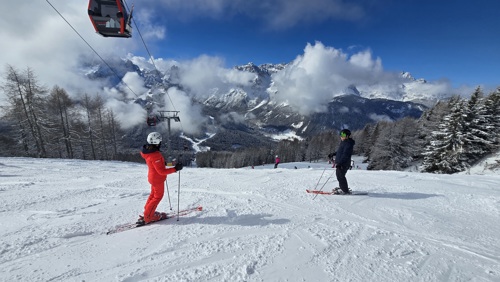
To begin with you just can’t escape the achingly stunning scenery; it’s everywhere you look. The exceptional beauty and significant geological value is why this area has been designated a UNESCO World Heritage Site. It means you can justifiably stop when your legs get tired and just take it all in. Most impressive of all are the iconic Tre Cime di Lavaredo (Three Peaks of Lavaredo) from where the area gets its name. These jagged limestone spires, surrounded by expansive snowfields, dense forests and frozen waterfalls just don’t seem real, especially when bathed in pinky late afternoon sunlight.
A Cultural Crossroads
3 Zinnen sits at the crossroads of northern and southern Europe, perched on the north eastern-most corner of the Südtirol, bordering Austria. This is the most culturally distinctive region in the alps, and that uniqueness is felt immediately by visitors in the cuisine, the architecture and the languages - Südtirol is officially trilingual: German, Italian, and Ladin are all recognised languages. In the 3 Zinnen area, German is most commonly spoken, Italian is widely understood (as is English in case you are worried) and you may hear some Ladin - an ancient Rhaeto-Romanic language which remains part of daily life for some locals. Part of the charm and just to confuse you, all the villages have two names - e.g. San Candido is the same place as Innichen and this will definitely catch you out. This cultural blend is a defining part of the experience, and not something you find in resorts your friends have heard of!
This layered identity gives Südtirol a rhythm that feels distinctly Alpine but subtly Mediterranean at the same time - Villages like Sesto (Sexten) feel Tyrolean in layout and atmosphere, with onion-domed church towers, wooden balconies, and painted farmhouses, yet cafés serve espresso and Hugo Spritz as readily as beer, and menus switch seamlessly between German and Italian. People seem happy (there’s a concept!) and it is noticeable how friendly and helpful they are here.
Five Ski Areas
The area encompasses three distinct mountain zones connected by lifts and buses: Monte Elmo (Helm), Croda Rossa (Rotwand), and the forested Baranci slopes. Together they offer just over 115 kilometers of pistes, a modest total by mega-resort standards but more than sufficient for a week or more of varied skiing in one of the alp’s most photogenic settings. The relatively small scale means you spend time skiing rather than queuing or navigating complex lift networks - a refreshing change from some of the Dolomite’s larger circus operations.
Monte Elmo: The Sun-Soaked Cruiser's Paradise
Monte Elmo forms the centerpiece of the 3 Zinnen area, and it's immediately apparent why locals favour this mountain when South Tyrol's famous sunshine bathes its south-facing slopes. The runs here are what Italians call "autostrada". They are wide, impeccably groomed boulevards that flow down the mountain in long, sweeping arcs perfect for laying down carved turns at speed.
The primary descents from Monte Elmo's 2,434-meter summit rank among the finest cruising terrain in the Dolomites. These aren't the leg-burning vertical kilometers you'll find on the Sella Ronda, but rather intermediate runs of ideal pitch and length - just challenging enough to maintain interest, just mellow enough to let you focus on technique rather than survival.
What sets Monte Elmo apart is the quality of the grooming combined with the exposure. The piste-bashers work nightly magic, leaving corduroy so pristine you almost feel guilty carving it up. But carve you must, because these runs reward proper edging and rhythm. Find your flow on Monte Elmo's main descents and you'll understand why some skiers prefer well-groomed intermediate terrain to the thigh-burning steeps.
The sunny disposition makes Monte Elmo ideal for late-season skiing when north-facing slopes turn icy and forbidding. Even in January, the southern exposure ensures comfortable temperatures and soft snow by midday. For photographers, the combination of perfect grooming, scenic backdrops featuring the Tre Cime di Lavaredo (Drei Zinnen), and excellent light creates endless opportunities for those Instagram-worthy action shots.
The mountain's layout encourages lapping - quick lift rides followed by satisfying descents that leave you ready to reload immediately. It's the kind of skiing where you look up at 2 p.m. and realize you've already logged twenty runs without noticing.
Croda Rossa: Where Advanced Skiers Find More Challenge
While Monte Elmo caters to cruisers, Croda Rossa delivers more technical steeps that accomplished skiers crave.
The red and black runs dropping from Croda Rossa's rocky summit provide legitimate challenges - These aren't quite like the manicured motorways of Monte Elmo; they're proper Dolomite descents where the mountain dictates the line and skiers must respond accordingly.
The technical sections come in manageable chunks rather than sustained vertical assaults, making Croda Rossa ideal for advanced intermediates looking to push their limits without committing to epic-length black runs. You can test yourself on a steep pitch, regroup on mellower terrain, then tackle the next challenge.
Expert skiers will appreciate that Croda Rossa's steep sections actually stay steep rather than petering out into anticlimactic runouts. When conditions are right, these runs offer some of the most satisfying technical skiing in the Dolomites.
Baranci: The Wind-Day Savior
Every ski area needs a sector that remains skiable when weather turns hostile, and Baranci fills that role perfectly in the 3 Zinnen area. These forested slopes offer genuine shelter when exposed alpine runs become unpleasant or dangerous.
The woodland skiing here feels distinctly different from the open bowls of Monte Elmo or the steeper personality of Croda Rossa. Tree-lined runs create natural corridors that block wind while maintaining good snow quality even when sun or wind has degraded snow on exposed terrain. The visual variety - skiing through gaps in the forest rather than across open snowfields - provides welcome contrast.
Baranci's intermediate runs flow naturally through the trees, following the mountain's contours rather than being bulldozed into submission. The terrain feels organic, with rhythm dictated by the landscape. It's pleasant, unintimidating skiing that allows you to focus on technique or simply enjoy moving through beautiful forest.
For families, Baranci's sheltered nature makes it ideal for less experienced skiers who might find exposed mountain terrain intimidating. The trees provide visual reference points and psychological comfort - there's something reassuring about skiing through forest rather than across vast white expanses.
The Hut-to-Hut Experience: Skiing with Purpose
One of the 3 Zinnen area's distinctive pleasures is the network of panoramic circuits connecting mountain huts. Rather than simply lapping lifts, you can ski with destinations in mind - planning routes that link spectacular viewpoints and traditional rifugi serving South Tyrolean specialties.
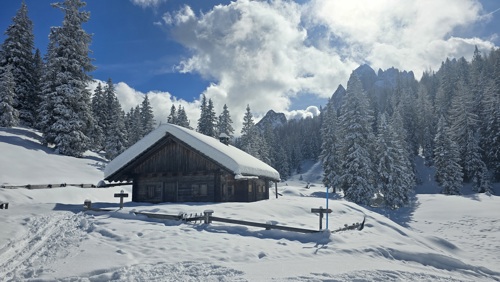
These circuits rarely challenge technically but they satisfy in different ways. The skiing becomes contemplative, almost meditative, as you traverse ridgelines with Dolomite spires rising all around. The destination becomes as important as the journey - a sunny terrace, a bowl of speck dumpling soup, a glass of local Lagrein wine with views across to Austria.
The classic circuit takes you from Monte Elmo across to various vantage points, each offering slightly different perspectives on the Tre Cime and surrounding peaks. You can complete the loop in a couple of hours or stretch it across an entire day depending on how long you linger at each hut.
This is skiing as the Italians perfected it - blending sport, scenery, cuisine, and dolce vita into something greater than any single element.
The Five Villages of 3 Zinnen Dolomites
The 3 Zinnen Dolomites ski area is built around five distinct villages, each appealing to different types of skier, from first-timers to confident mountain explorers, and each with its own character and identity:
Sesto (Sexten) is the area’s alpine heart and best suits strong intermediates and advanced skiers. With direct access to Monte Elmo and Stiergarten, it offers long, scenic red runs, steeper blacks, and a quieter, more traditional atmosphere focused on skiing quality rather than nightlife.
San Candido (Innichen) is the most versatile base and ideal for beginners, families, and mixed-ability groups. The gentle slopes of Monte Baranci are perfect for learning, while good transport links make it easy to reach the wider ski area. The village itself is lively, with shops, cafés, and a historic centre.
Versciaco (Vierschach) appeals to keen skiers who value convenience. The Helm gondola rises directly from the train station, offering seamless access to the slopes and making it one of the best train-to-ski bases in the Alps. Quiet and efficient, it suits those focused on skiing rather than resort life.
Dobbiaco (Toblach) is best for all-round winter sports enthusiasts, particularly cross-country skiers. Centrally located with excellent bus and rail links, it works well for skiers who want flexibility, space, and access to a wide range of outdoor activities.
Braies (Prags) is the most tranquil option, suited to experienced skiers and couples seeking scenery and calm rather than doorstep skiing. Known for the stunning Lago di Braies, it offers a peaceful base with easy access to the main lifts by shuttle or car.
Together, these villages make 3 Zinnen a destination that works exceptionally well for different skier types without compromise, combining variety, authenticity, and seamless connectivity.
Our Thoughts
We think of the 3 Zinnen Dolomites as a quieter alternative to the now uber-busy Sella Ronda circus. The charming village of Sesto (Sexten) provides the most convenient base, with direct gondola access to Monte Elmo. San Candido (Innichen) offers more lodging options and connects via bus.
The area is included in the Dolomiti Superski pass, making it easy to combine with nearby ski areas. It's particularly worth visiting midweek when even minimal crowds disappear entirely, leaving you with essentially private skiing on immaculately groomed runs.
Come here for quality over quantity - for beautifully maintained pistes in spectacular settings rather than endless vertical. Come for the combination of varied terrain types within a manageable area. Come for authentic South Tyrolean mountain culture before mass tourism discovers what locals have known all along.
With almost blanket snow-making, 3 Zinnen Dolomites guarantees skiing from late November into April. Connecting the slopes, a state-of-the-art network of 30 lifts operates entirely on renewable energy. Complementing the downhill pistes (115 kms) alternative activities are on offer such as snowshoeing, ski touring and tobogganing.
If you are thinking about ski instruction, it’s good to know that this multi-lingual area will speak your language. Well-prepared nursery slopes with magic carpets and a family of giant snowmen that add quirky fun for kids, make 3 Zinnen Dolomites an ideal choice for families, especially those with first timers to skiing. For more accomplished skiers the full-day Giro delle Cime tour (35 km/5600m elevation change) is a lovely circuit away from the fray that takes in some of the most impressive peaks in the Dolomites. Thrill seekers will enjoy the challenge of what is claimed to be Italy’s steepest slope - the Holzriese (71% gradient) in the Sesto area. Twice-weekly night-skiing and three great toboggan runs are also available.
Wide-ranging accommodation options cover cosy B&Bs, family run establishments, luxury hotels and fine spa and wellness retreats. All are complemented by irresistible cuisine: local specialities and Alpine-Mediterranean dishes are served throughout the mountain refuges, gourmet restaurants, cafes and bars.
Getting there is much easier than it looks. Access the 3 Zinnen Dolomites ski resort via Venice using the conveniently timed Cortina Express – operating daily this year. Other airports within a two- to three-hour taxi transfer include Treviso and Bolzano in Italy and Innsbruck and Klagenfurt in Austria.
Train travel to Versciaco (Versciaco–Vierschach) - the main rail stop for the 3 Zinnen Dolomites ski area is scenic, efficient, and well-integrated into Italy’s rail network. Versciaco is a small village located between San Candido (Innichen) and Sesto (Sexten), northern Italy, right on the Puster Valley Railway (Pustertalbahn). It even has a train-to-ski lift connection, making it one of the most convenient ski stations in the Alps.
In addition to skiing, the 3 Zinnen area offers a wealth of outdoor activities for visitors to enjoy. From snowshoeing and cross-country skiing to ice climbing and winter hiking, there are endless opportunities to explore the winter wonderland of the Dolomites. For those seeking relaxation, the region's thermal spas provide the perfect retreat after a day on the slopes, offering soothing treatments and panoramic views of the surrounding mountains.
The 3 Zinnen Dolomites may never achieve the fame of Cortina or the mega-resort scale of larger areas. But for skiers who value character over size and quality over hype, this hidden corner of the Dolomites delivers something increasingly rare: exceptional skiing that still feels like a secret worth keeping.
Fact Panel:
Accommodation
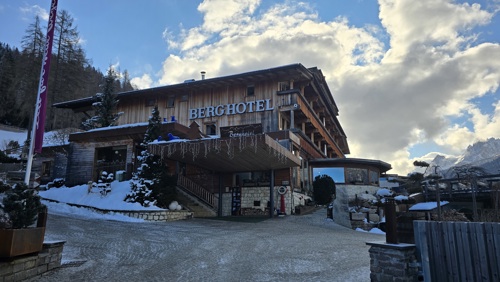
We really enjoyed the perfectly-situated Berghotel in Sexten. Ski in / ski out with a great spa and views to die for from the outdoor pool: https://www.berghotel.com/en/
134 € per person/per night (in double room) on a half board basis
Also consider Hotel Eggele, a lovely boutique hotel in San Candido: https://www.eggele.it/en/the-eggele.html
120€ per person/per night (in double room) on a half board basis
Getting there:
Venice Marco Polo, Treviso, and Bolzano airports are all two to three hours away by car or shuttle. For our trip it was just over a two hour taxi transfer from Venice Marco Polo.
The Cortina Express runs direct from Venice Marco Polo - https://booking.cortinaexpress.it/en
Train travel to Versciaco (Versciaco–Vierschach) — the main rail stop for the 3 Zinnen Dolomites ski area - it is scenic, efficient, and well-integrated into Italy’s rail network. Versciaco even has a train-to-ski lift connection, making it one of the most convenient ski stations in the Alps.
Lift pass:
3 Zinnen Dolomites adult ski pass is available from €72 per day, (2025/26)
For everything 3 Zinnen Dolomites - https://www.dreizinnen.com


